
15 Name Activities for Preschool: From Recognition to Writing
These low-prep name activities for preschool help children move from spotting their own name to building, spelling, and beginning to write it—without turning practice into a worksheet marathon.
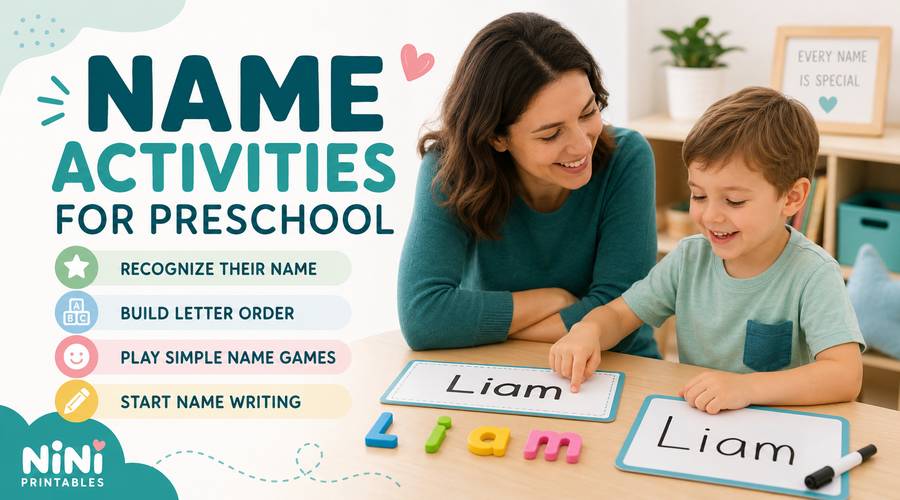
For many preschoolers, a child’s name is one of the most meaningful words they can practice. For example, it appears on cubbies, artwork, sign-in sheets, lunch boxes, and classroom labels. As a result, name learning feels practical as well as personal. Head Start’s early-writing guidance specifically encourages name writing even at early drawing and scribbling stages, while NAEYC notes that children are often especially interested in the letters in their own names.[1][3]
However, name practice works best when it matches the child’s current skill. A preschooler who is still learning to find their name does not need ten lines of tracing. First help them notice the whole name. Next, let them handle and arrange its letters. Then add short writing attempts when they are ready.
This guide organizes preschool name activities by that progression, so you can choose a useful next step instead of simply collecting more activity ideas.
What Should You Practice First?
Before choosing an activity, watch what happens when the child sees their printed name beside one or two other names. Can they find it? Next, notice whether they recognize the first letter. Then see if they can put the letters in order with a model nearby. Finally, watch for any attempt to write the name.
You do not need a formal test. Instead, use the child’s response to choose the easiest useful step.
Use This Four-Step Progression
At this stage, the child finds or matches their printed name, even if they cannot name every letter yet.
Next, loose letters, clips, or puzzle pieces help the child copy the name in the correct order.
With practice, the child recalls more of the letter sequence with less help from the model.
Finally, the child makes an independent or partly supported attempt to form the letters of the name.
If a step feels frustrating, move back one level and make it more playful. Progress is rarely perfectly linear. A child may recognize their name independently but still need a model for spelling or writing.
Name Activities for Preschool at a Glance
The table below makes it easy to pick an activity by the skill you want to practice. On phones, each row becomes a stacked card so the page stays easy to read without horizontal scrolling.
| Stage | Good activities | What to notice |
|---|---|---|
| Recognize | Photo match, name hunt, parking spot, dot-marker name | Can the child find the correct printed name? |
| Build | Magnetic letters, clothespins, name puzzle, playdough letters | Can the child copy the letter order from a model? |
| Spell | Letter hunt, mix-and-fix, missing-letter game | How much of the sequence can the child remember? |
| Write | Finger trace, rainbow name, large-movement writing, dry-erase card | Does the child attempt recognizable letter forms without pressure? |
Name Recognition Activities for Preschoolers
First, name recognition comes before perfect spelling or handwriting. At this stage, keep the whole printed name visible and give the child repeated chances to find it in meaningful places.
Photo and Name Match
Put a simple photo card beside a card showing the child’s first name. After several easy matches, separate the photo and name cards and ask the child to pair them again. In a classroom, start with only two or three children at a time.
Find Your Name
Place the child’s name card among one or two other name cards. Ask, “Can you find your name?” Once that becomes easy, add more choices or move the activity to a morning sign-in area.
At first, keep the print style consistent. Fancy fonts can make the same letters look unfamiliar to a beginning learner.
Name Parking Spot
Write the child’s name on a few paper “parking spaces” and write other names or words on the remaining spaces. The child parks a toy car on their own name each time they find it.
Meanwhile, this turns a simple visual match into a quick movement activity without adding difficult directions.
Dot-Marker Name
Print the child’s name in large clear letters. First, ask them to point to their name. Then let them place dots, stickers, or fingerprints along the letter shapes.
At this point, the goal is still recognition and noticing the letters. Neat letter formation can come later.
Build and Spell Your Name Activities
Next, once the child recognizes the printed name, move from looking to handling. In addition, loose letters make the sequence visible and give children a way to correct mistakes without erasing or starting over.
Magnetic Letter Name
Place a name card above a magnetic board or refrigerator. Give the child only the letters needed for the name and let them copy the sequence. Later, mix in two or three extra letters for a gentle challenge.
Clothespin Name
Write one letter on each clothespin and the full name on a strip of sturdy paper. The child clips each letter below its matching position. This combines letter matching with a small hand-strength challenge.
If pinching clips is still difficult, use paper letter cards instead. The literacy goal matters more than the tool.
Mix-and-Fix Name Puzzle
Write the name on a strip, cut between the letters, and mix the pieces. Keep an intact name card nearby so the child can rebuild the name. As confidence grows, turn the model face down for one attempt and check it afterward.
Playdough Name
Roll playdough into short “snakes” and shape them over large printed letters in the child’s name. Say each letter name as you build it, but keep the conversation light rather than quizzing every letter.
For more hands-on practice, the site’s preschool playdough activities can add easy fine-motor variations.
Name Letter Hunt
Hide the letters from the child’s name around a small room or learning area. Each time they find one, bring it back to the name card and place it in the correct position.
For example, this works especially well for a child who enjoys movement but loses interest during longer table activities.
Need a quiet follow-up after the hands-on activity?
Browse Nini Printables for free tracing, matching, counting, shapes, pre-writing, and fine-motor practice. A short printable works best as a follow-up—not as a replacement for the hands-on name activity.
Beginning Name Writing Activities
However, writing a name is not an all-or-nothing skill. A preschooler may begin with a few recognizable letters, letter-like forms, or a strong first letter. Head Start’s early-writing framework encourages adults to support these attempts rather than waiting for perfect handwriting.[1]
Therefore, keep writing practice short and give the child a clear model. If pencil control is the main difficulty, use larger movement first.
Finger-Trace the Name
Write the name in large letters on paper, a dry-erase board, or a tray with a safe sensory material. Let the child trace each letter with one finger while looking at the model.
As a result, this reduces the pencil-control demand so the child can focus on the path of each letter.
Rainbow Name
Write the child’s name once in large clear letters. Let them trace over the same name with two or three different crayons or washable markers. Stop before the repetition becomes tedious.
Large-Movement Name Writing
Use a chalkboard, easel, large sheet of paper, or outdoor chalk space. Model one large letter at a time and let the child copy it using the shoulder and arm instead of only the fingers.
If the child needs more preparation for controlled marks, see prewriting skills by age and handwriting activities for preschoolers.
Dry-Erase Name Card
Put a clearly printed name card inside a reusable dry-erase sleeve. The child can trace once, wipe it clean, and then try copying the name underneath. Because the surface resets quickly, mistakes feel less permanent.
Keep the session brief. The goal is a willing writing attempt, not a perfect finished card.
Name Games for Preschoolers
After that, name games are especially useful when a child already recognizes the name and needs more practice remembering the letter order. Instead of adding a new worksheet, change one part of a familiar name-building activity.
Missing Letter Name Game
Build the child’s name with letter cards, then remove one letter while they close their eyes. Ask which letter is missing and where it belongs. Start by removing an easy letter, such as the first letter, before choosing a middle letter.
If the child is unsure, show the printed name card and solve it together. The game should feel like noticing, not testing.
Build Your Name Race
Put the child’s name letters in a small basket. Say “go,” and let the child build the name beside a model. The “race” can be against a silly timer, a song, or an adult building another word.
Still, keep accuracy more important than speed. If racing creates pressure, drop the timer and call it a “name challenge” instead.
You can also reuse the same letters for a quick mix-and-fix round or a classroom find a friend’s name game. Those small changes add repetition without making the practice feel identical.
A Simple 5-Minute Name Practice Routine
In practice, preschool name activities do not need a 30-minute lesson. For many children, a predictable five-minute routine is easier to repeat and easier to stop while the activity still feels positive.
Find the name card, point to the first letter, or match the name to a photo.
Use magnetic letters, cards, clips, or puzzle pieces to put the name in order.
Make one short writing attempt, or use a finger-trace activity if pencil work is not ready yet.
Then, repeat the routine a few times during the week and change only the materials. That consistency helps you see what the child can do more clearly than constantly introducing a brand-new game.
Build the skills behind name writing
If the child enjoys name practice but still struggles with lines, curves, or hand control, use a related activity instead of adding more name repetitions.
Easy Supplies for Preschool Name Activities
Fortunately, most name activities need only paper, a marker, and a few reusable materials. First, use what you already have. Optional supplies can make practice easier to repeat, but no single product teaches the skill by itself.
- Magnetic alphabet letters
- Washable dot markers
- Child-friendly clothespins
- Playdough
- Alphabet stamps
- Crayons or washable markers
- Reusable dry-erase sleeves
- Letter tiles or paper letter cards
For children who need more hand-strength or control practice, choose one supply that supports several activities rather than buying a separate material for every idea.
When Is a Child Ready to Write Their Name?
Importantly, a child does not need to master every pre-writing shape before making a name-writing attempt. Early writing develops gradually, and children can show different levels of conceptual, spelling, and letter-writing knowledge before their writing looks conventional.[5]
Research with preschool children has also found that stronger name-writing proficiency is associated with stronger performance on several emergent-literacy measures. However, that finding is an association; it does not show that practicing a name by itself causes broader literacy gains.[4]
Therefore, look for readiness through interest and participation rather than a strict age cutoff. A child may be ready to try when they can recognize their name, notice some of its letters, imitate simple marks, and willingly copy or trace a short model.
Practical Signs a Child Is Ready to Try
- Recognizes their printed name among a few choices
- Notices or names the first letter
- Can place some name letters in order with a model
- Shows interest in making marks or letter-like shapes
- Can stay with a short activity without strong frustration
- Accepts help and tries again after a difficult letter
However, these are practical signs, not a pass-or-fail checklist. Children develop at different rates. If you want a broader developmental view, see handwriting for 4-year-olds and prewriting skills by age.
4 Common Name-Practice Mistakes to Avoid
Even so, a good activity can become frustrating when the task is harder than the skill you meant to practice. These four adjustments keep name practice focused and useful.
1. Starting With Repeated Tracing Too Soon
If the child cannot yet find their printed name, tracing asks for handwriting before the name itself is familiar. Start with matching and finding. Then move to letter order and short writing attempts.
2. Giving Too Many Letter Choices
A child who is learning the sequence may struggle if the table is covered with the whole alphabet. First offer only the letters in the child’s name. Later, add a few extra letters when the basic sequence is secure.
3. Changing the Name Model Every Time
Decorative fonts and changing capitalization can add unnecessary visual difficulty. Use one clear model with conventional capitalization—a capital first letter followed by lowercase letters—while the child is learning what the name looks like.
4. Turning Every Attempt Into a Test
Instead of asking the child to prove what they know on every turn, keep a model available and solve mistakes together. As a result, the activity provides practice without making uncertainty feel like failure.
Frequently Asked Questions
How do you teach a preschooler to recognize their name?
Start with a consistent printed name card and pair it with something familiar, such as the child’s photo, cubby, or artwork. Then let the child find the same name among one or two other choices. Once that is easy, increase the number of choices and begin noticing the first letter and the full letter sequence.
Should preschoolers be able to write their name?
Name writing is a common early-literacy experience in preschool, but it develops gradually. Some children write a recognizable full name, while others begin with the first letter, a few letters, or letter-like forms. Encourage meaningful attempts and use the child’s development and school expectations as guides rather than treating name writing as a universal pass-or-fail milestone.
What are easy name activities for preschool?
Easy options include photo-and-name matching, finding a name card, building the name with magnetic letters, making a cut-apart name puzzle, using playdough over large letters, trying a missing-letter game, and tracing a name once on a dry-erase card. Choose the activity that matches whether the child is recognizing, building, spelling, or writing.
Writing and Letter-Practice Questions
How can I practice name writing without worksheets?
Try finger tracing, chalk, an easel, magnetic letters, playdough letters, letter tiles, or a reusable name card. Large-movement writing and letter-building activities can reduce the pencil demand while still helping the child notice letter shapes and order.
Should children write their names in uppercase or lowercase?
Use a clear model with conventional capitalization—a capital first letter followed by lowercase letters. However, if a child currently forms uppercase letters more easily, keep showing the conventional model without turning every attempt into a correction session. The goal is steady exposure and willing practice.
What if a child can recognize their name but cannot spell it?
Move to the build stage. Give the child the exact letters from the name and a printed model, then let them place the letters in order. After that becomes easy, remove one letter, mix the letters, or briefly hide the model. This bridges recognition and independent spelling without jumping straight to handwriting.
Keep Name Practice Meaningful
Ultimately, the best name activities for preschool are not the ones with the most materials. They are the ones that give the child a useful next step. Start by helping the child recognize the whole name. Then build it, play with the letter order, and add short writing attempts as confidence grows.
For that reason, a five-minute routine repeated across the week is often more practical than a large one-time project. Keep the model clear, stop before frustration takes over, and let the child experience their own name as a word they can notice, build, and gradually write.
Ready for another low-prep activity?
Nini Printables offers free preschool and kindergarten printables for tracing, matching, counting, shapes, pre-writing, and fine-motor practice. Choose a short follow-up that fits the skill your child or class is working on now.
About This Guide
Nini Printables creates simple, low-prep activities for preschool and kindergarten learners. This guide is designed for parents, preschool teachers, homeschool families, caregivers, and early-years educators who want practical name-learning ideas that can be adapted to a child’s current skill level.
The recognize → build → spell → write progression is an editorial teaching structure created for this guide, not a validated developmental scale or diagnostic assessment. It organizes the activities by increasing task demands so adults can choose a manageable next step. The early-writing guidance was checked against U.S. Head Start resources, NAEYC professional guidance, and peer-reviewed research on preschool emergent writing. Children develop at different rates, and local preschool or kindergarten expectations may differ.
Learn more on the About Nini Printables page.
Teaching References
These sources were used to check the guide’s early-literacy, alphabet-awareness, and emergent-writing guidance. DOI links are included for the peer-reviewed journal articles; institutional guidance is cited by its official webpage.
- U.S. Department of Health and Human Services, Head Start. A Framework for Understanding Early Writing Development. Guidance includes encouraging name writing during early writing development and using meaningful writing opportunities such as sign-in routines.
- U.S. Department of Health and Human Services, Head Start. Literacy: Preschool. Preschool literacy guidance includes alphabet awareness, including recognizing letters from one’s own name.
- Byington, T. A., & Kim, Y. (2017). Promoting Preschoolers’ Emergent Writing. Young Children, National Association for the Education of Young Children.
- Puranik, C. S., & Lonigan, C. J. (2012). Name-writing proficiency, not length of name, is associated with preschool children’s emergent literacy skills. Early Childhood Research Quarterly, 27(2), 284–294. DOI: 10.1016/j.ecresq.2011.09.003.
- Puranik, C. S., & Lonigan, C. J. (2014). Emergent writing in preschoolers: Preliminary evidence for a theoretical framework. Reading Research Quarterly, 49(4), 453–467. DOI: 10.1002/rrq.79.
Educational note: These activities are general early-learning ideas, not a developmental assessment. If you have concerns about a child’s writing, language, vision, motor skills, or school readiness, discuss them with the child’s teacher or an appropriately qualified professional.
Enjoying the free resources? Sharing this guide with another parent, teacher, or homeschool family—and exploring the printable library—is a simple way to support Nini Printables and help more families find the free activities.